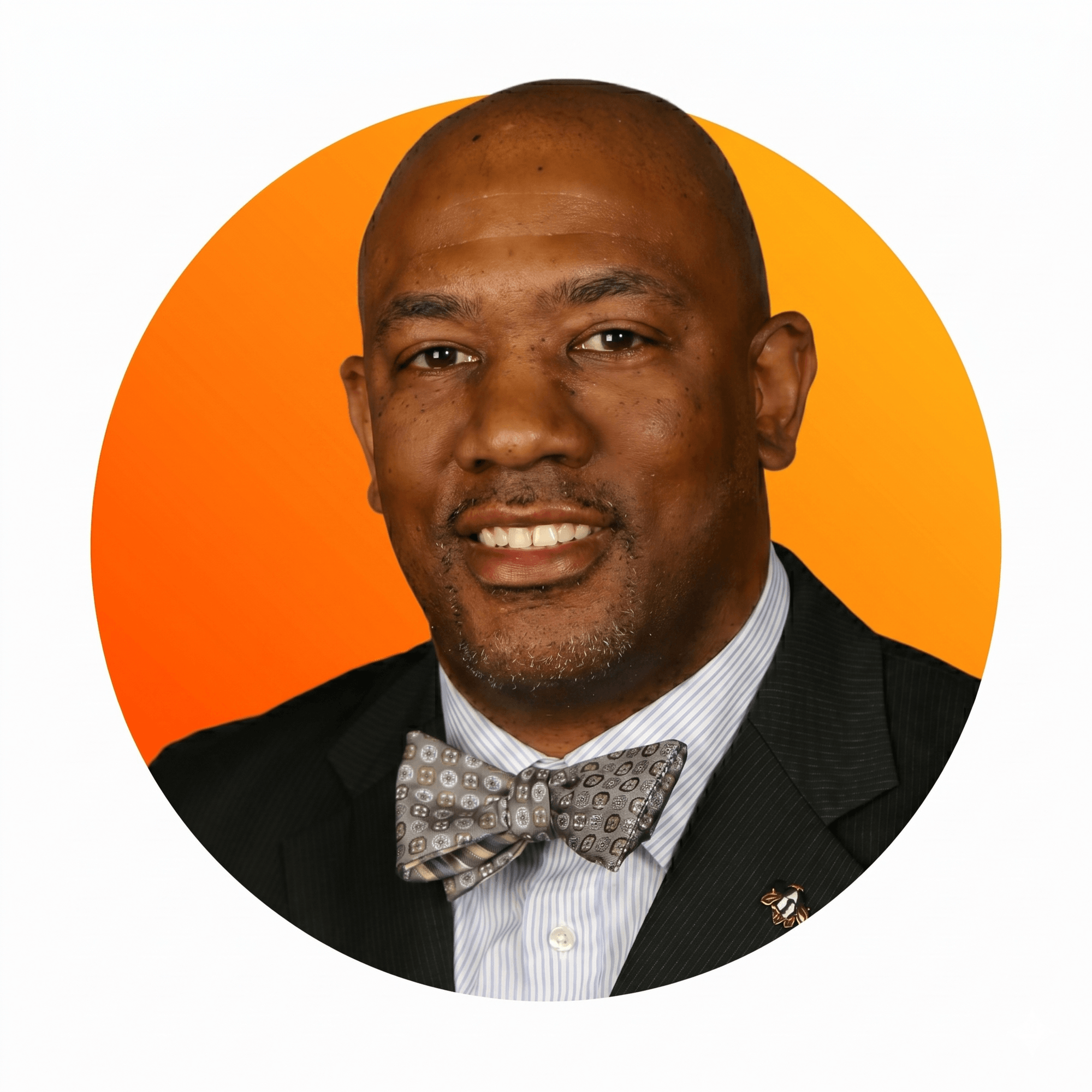
FICGN Narrative FellowsApril 2026

"Untitled Essay"

— Nathan Stephens · FICGN Narrative Fellows

Nathan Stephens on a conditional admission, a 4.0 GPA, and why college admissions committees hold real power to set formerly incarcerated students up to win.

FICGN Narrative Fellows · Essay

  • Essay numberNo. 06 of 07
  • Reading Time~7 minutes
  • PublishedApril 2026
  • ThemeHigher Education · College Admissions · Fair Chance
  • Fellow NameNathan Stephens
  • Author one-linerMagna Cum Laude graduate and advocate for fair-chance college admissions
  • juan-guerra-ge09scOFQnc-unsplash.jpg

    Untitled Essay


    "Based upon your academic performance from your other schools, we will allow you to enroll for one semester of classes to see how well you do."


    Those were the words of the college's admissions representative as we were about to conclude the meeting. I sensed that what he said wasn't necessarily what he meant. Passively, I responded, "'kay" — knowing that I was not okay with his condescending tone, the one that flared with arrogance.

    At that moment I became determined to show him, to make him eat the words he uttered as well as the ones he abstained from saying. At the end of that first semester, I had a 4.0 GPA. That accomplishment felt as if I had metaphorically delivered a powerful counter punch to his misjudgment of me. I was determined to show him he was wrong, and I graduated Magna Cum Laude with a 3.72 GPA.

    Every year I'm reminded how college admissions representatives review applications and try to identify students who will be a success at their institution. I want to challenge the fear-based hesitancy of college admissions for formerly incarcerated people. More likely than not, if a person chooses to pursue a college degree post-incarceration, they have already anticipated how the degree would enhance their lives. During this 2026 Fair Chance Month, I want to see students, faculty, staff, and alumni challenge their admissions departments to give formerly incarcerated people a fair chance at getting an education.

    College admissions representatives have the opportunity to set formerly incarcerated students up for success and to tap into the inverse correlation that exists between educational attainment and criminal activity. The more educated a person becomes, the less likely they are to break the law. A 2024 study by Webb et al. showed that formerly incarcerated people with college degrees were 7% more successful in their lives after incarceration. Admitting these students on the basis of their academic merit promotes robust classroom discussions.

    Our society will eventually realize that investing in people to meet their needs is what makes society safer. Research shows that formerly incarcerated students are typically fully aware of the cost-benefit analysis regarding college education. Rather than college admissions representatives reinforcing perpetual punishment, the opportunity exists to help those who have demonstrated a desire to not only change their narrative but to change their lives.

    ✦ ✦ ✦


    The reality is that too often prisons only line the pockets of a select group of people through capitalistic means. These systems benefit the commissary or visiting room vending machine suppliers, the corporations that supply the phones incarcerated people are allowed to use, and in many states, the corporations or groups that use prison labor to produce goods or provide services for minimal cost. While the prison industrial complex exploits opportunities and plays on the fears of the general public, the residual effect of carceral systems extends well beyond the prison gates to create collateral consequences — a perpetual punishment.

    Over 600,000 people are released from America's prisons annually with the opportunity to build their lives back better. But rebuilding their lives often requires them to exert herculean efforts to overcome being denied employment, housing access, college classes, or even the opportunity to volunteer at their children's school. Admissions committees are uniquely positioned to be a part of formerly incarcerated students' teams — to help promote their changed lives.

    Research has consistently indicated that obtaining a college education substantially increases the chances that a formerly incarcerated person will boost their employment opportunities and earnings potential. However, being granted the ability to access higher education and the benefits afforded to college graduates is required for these additional opportunities to manifest. In 2019, the American Association of Collegiate Registrars and Admissions Officers (AACRAO) opined that if the option to remove criminal background questions on college applications was on the table, higher education institutions should consider doing so.

    "Admissions committees are uniquely positioned to be a part of formerly incarcerated students' teams — to help promote their changed lives."

    In the past, America has been known as the "land of opportunity," a place where a person just has to "pull themselves up by their bootstraps." But the reality is that when it comes to formerly incarcerated students, those opportunities must be reinforced by institutional agents who are willing to give them a chance. In hindsight, I may not have liked what the admissions rep said to me, but his words ignited within me a fierce desire to prove him wrong.

    ✦ ✦ ✦

    What formerly incarcerated people need is a fair chance. A chance to flourish, bloom, and benefit from the lessons learned along life's journey — without carrying the additional weight of past misgivings. College admissions representatives, college administrators, elected officials, students, alumni, and the general public are being asked to stop their biased and discriminatory acts against formerly incarcerated people, and to allow them to move forward without the fear of perpetual punishment. Admit them to your campuses. Fill housing and employment vacancies based on their ability to meet fair and mutually beneficial requirements.

    __________

    The Ask

    Stop reinforcing perpetual punishment. Admit formerly incarcerated students on the basis of academic merit.

    For college admissions committees and registrars:

    Remove criminal background questions from undergraduate and graduate applications, in line with AACRAO's 2019 guidance. Evaluate formerly incarcerated applicants on their academic record, their demonstrated commitment to education, and their potential to contribute — not their conviction history. Build internal review processes that treat conviction information, where it is relevant, as one factor in context, not a disqualifier in isolation.

    For college administrators and elected officials:

    Direct your institutions and the institutions you fund to adopt fair-chance admissions policies. Expand prison-to-college pipelines that follow students from inside to release. Recognize that investing in formerly incarcerated students is an investment in public safety, not a risk to it.

    For students, faculty, staff, and alumni:

    Ask your admissions department whether they consider conviction history in evaluating applicants. If they do, ask why — and how. Push for a fair-chance admissions policy at the institutions you study, teach, work, or donate at. Use this Fair Chance Month to start the conversation.
    Higher Education · College Admissions · Ban the Box · Fair Chance · Reentry · Public Safety · Educational Attainment

    Author Bio

  • Dr. Nathan A. Stephens is an Assistant Professor at Illinois State University. He earned his bachelor's degree in social work at Columbia College and both his master's and Ph.D. degrees at the University of Missouri. In May 1989 he graduated from high school and in December, exactly one week after completing his first semester of college, he was arrested for possession of crack cocaine. Growing up in a neighborhood where drug dealing was the norm, and his mom became addicted, the future social work professor gave in to his environment. He was sentenced to probation and relocated to Oklahoma in an effort to start fresh and get away from his trauma. In 1994, after a series of bad experiences and poor choices, he participated in a robbery and was arrested. After serving almost 6 years, he was extradited back to Missouri for his probation violation. Released in 2000, he began to rebuild his life using education as his foundation.
  • In the Spring of 2020, Dr. Stephens created and taught Social Justice in Social Work through the University of Illinois at Urbana-Champaign’s(UIUC) Education Justice Project. Dr. Stephens’ jokes that he increased the number of Black and Brown men in UIUC’s social work program by 800% and 1500% respectively. Those numbers reflect the small amount of Black and Latino men in the social work profession.
  • Dr. Stephens’ future plans includes writing a memoir based on journal entries during 3 years of his incarceration. It will reflect on how the crack epidemic of the 80’s and 90’s decimated many Black communities and changed his life trajectory. While sitting in a jail cell facing 25 years to life, he could only wish that he had someone that he could have talked to. Someone that could have offered him some guidance and solutions to his problems. A short time later, he had a vision about his life’s work featuring work with Black boys and men. His quest then began to become a social worker and to ultimately be “who he needed back then.”

  • FICGN_Logo.svg

    Seven leaders. Seven essays.

    One national moment.

    Caitlynn.pngCaitlynn Acoff"Qualified by Survival"
    Click icon above to read
    Amy.jpgAmy Doty"Fair Chance Means More Than Just Opportunity"
    Click icon above to read
    Tanaine_s Headshot.pngTanaine Jenkins"Untitled Essay"
    Click icon above to read
    wilfredo.jpgWilfredo Laracuente"America’s Quiet Life Sentence"
    Click icon above to read
    troy-carr-headshot.jpgTroy Richard Carr"Grandma Cathy Lives in the Stars."
    Click icon above to read
    Nathan Pro Headshot.pngNathan Stephens"Untitled Essay"
    Click icon above to read
    Dawn headshot.jpegDawn Jackson"The Silence in My Heavy Bookbag"
    Click icon above to read

    Help us move from second to fair.

    Commission an essay. Republish a fellow's piece. Book a fellow for a panel, webinar, or interview. Support the next cohort. The work continues beyond April — and the fellows are ready to lead it.

    Cookie Settings
    Mmm...cookies! 🍪

    Our website uses necessary + analytical cookies.


    By continuing to browse, you accept cookies.

    Cookie Settings

    We use cookies to improve user experience. Choose what cookie categories you allow us to use. You can read more about our Cookie Policy by clicking on Cookie Policy below.

    These cookies enable strictly necessary cookies for security, language support and verification of identity. These cookies can’t be disabled.

    These cookies collect data to remember choices users make to improve and give a better user experience. Disabling can cause some parts of the site to not work properly.

    These cookies help us to understand how visitors interact with our website, help us measure and analyze traffic to improve our service.

    These cookies help us to better deliver marketing content and customized ads.