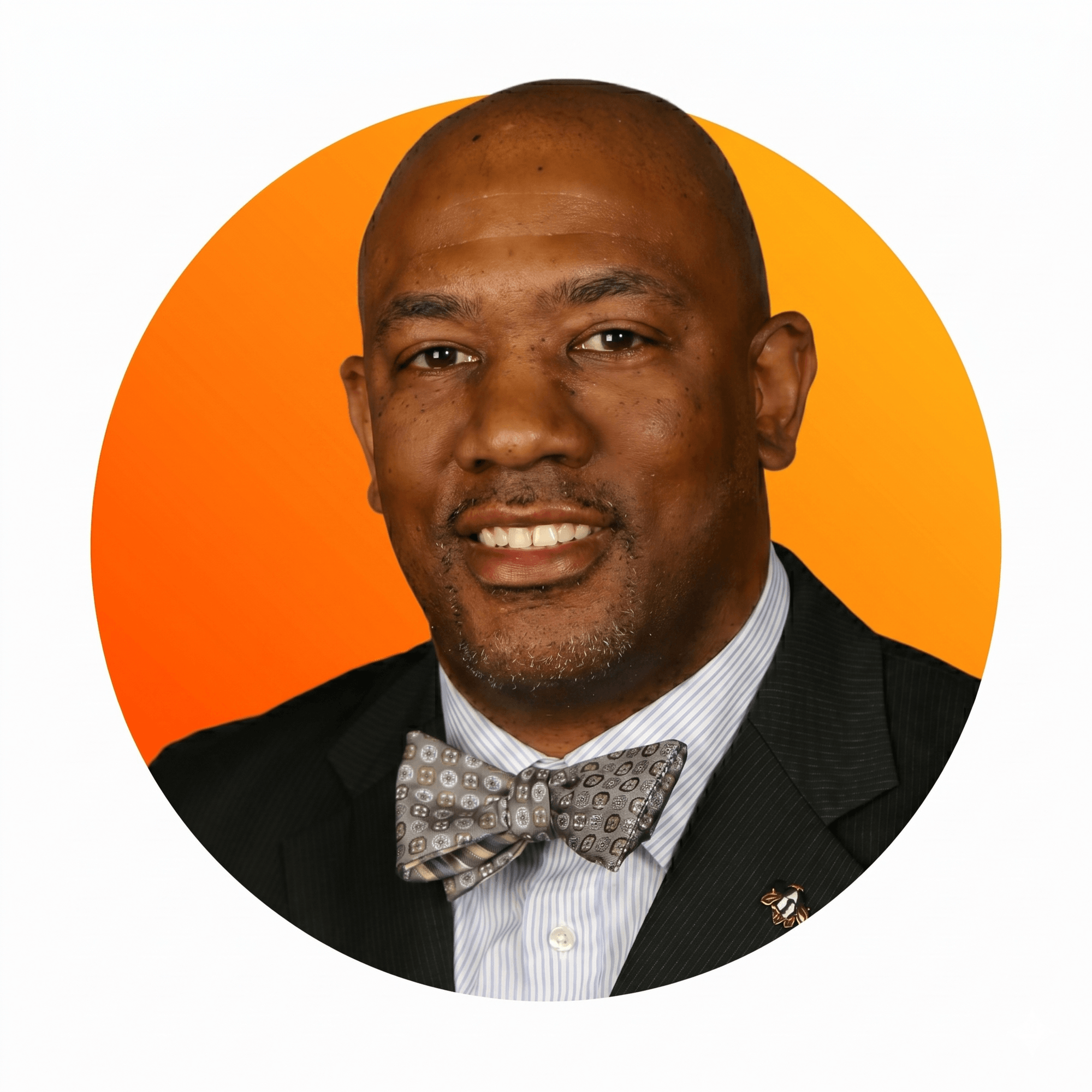
Justice-impacted people are often invited to share their stories. It’s time we are trusted to lead.
— Amy Doty · FICGN Narrative Fellows

Poverty. Addiction and violence in my home. A parent serving a life sentence. Involvement with the justice system before I was old enough to learn how to drive. While I was still swaddled, the system was waiting for me to enter it. My Adverse Childhood Experiences score was a ten out of ten, indicating levels of trauma strongly associated with significantly higher risks of incarceration later in life.
None of those factors guaranteed my path. But they made it far more likely. And eventually, through my own choices layered on top of those circumstances, I did become a statistic.
Every April, the country observes "Second Chance Month," highlighting opportunities for people returning from prison. As colleges, employers, and policymakers increasingly engage in that conversation, we should also be asking a deeper question: who is being prepared not only to participate, but to lead change initiatives?
"Second chance" assumes the first chance was fair. The conversation we should be having is not about second chances. It is about fair chances — opportunities not only to rebuild lives, but to lead systems-level change. Not just for the exceptional few whose stories are easy to celebrate, like New York Mayor Mamdani's appointment of Stanley Richards as the first formerly incarcerated Commissioner of the Department of Correction, but for the many people whose potential has always been there.
Because the forces that shape incarceration in the United States are not mysterious: poverty, childhood trauma, addiction in families, early contact with the justice system, and communities with limited access to stable housing, education, and opportunity. And race. Black Americans are incarcerated at nearly five times the rate of white Americans, and other communities of color — including Latino and Native American communities — also experience disproportionately high rates of incarceration. I am white. Race did not compound the barriers I faced in the same way it does for many others. But the broader pattern is clear: opportunity is not distributed equally, and those most affected are still too rarely the ones shaping institutional decisions about how to address systems of harm and opportunity gaps.
When the starting line isn't equal, the conversation cannot stop at second chances. It has to move toward fair ones. I know this because while my early life pushed me toward prison, a series of fair chances helped pull me toward something else. One of the most important of those chances was access to the liberatory and transformative power of higher education.
Today, as a college dean who leads both prison education and criminal justice programs, I see how access to education can transform not only individual trajectories, but the systems that shape them.
✦ ✦ ✦
Across the country, colleges are expanding prison education programs and removing barriers to enrollment and reentry. In states like Nebraska, ban-the-box legislation and cross-sector, state-level commitment to the national Reentry 2030 initiative are removing barriers to employment and professional licensure. These efforts matter. They represent real progress in widening access. But access alone is not enough.
College classrooms inside prisons are often misunderstood as privileges or rewards. In truth, education is a human right and public good, and access to it affirms that human potential does not disappear because someone is incarcerated. Education opens the door. Leadership determines who gets to shape the room.
In many of these spaces, justice-impacted individuals are welcomed for their perspective. Their stories are valued. Their ability to support and mentor others is recognized. But too often, the opportunity stops there, because they remain underrepresented in senior leadership roles within the very institutions working on justice reform.
For years, higher education has invited people like me to share our lived experience. But many justice-impacted individuals are not only storytellers. We are educators, administrators, researchers, and leaders working to change the systems we once navigated. What higher education needs now is leadership rooted in lived expertise. Leadership grounded in lived expertise does not replace academic or professional training. It strengthens it. It brings forms of knowledge that cannot be learned from policy reports alone.
Institutional commitment to fair chances cannot stop at access or entry-level opportunities. It must include intentional investment in leadership pathways — mentorship, advancement, and decision-making authority. Justice-impacted people do not just belong in the rooms where decisions are discussed. We belong in the positions where decisions are made.
During Fair Chance Month, institutions should reflect not only on access, but on authority. What would the future look like if the people most impacted by the justice system were not only included, but leading the solutions to the problems underlying incarceration?
✦ ✦ ✦
I began this story by saying I was born bound for prison, and I did go there. But I was fortunate to be welcomed into an institution that viewed my experience as valuable expertise. Today, I see that same potential in students walking into college classrooms inside prisons — students whose futures will be shaped by whether higher education and employers extend fair chances beyond mere breadcrumb opportunities.
A fair chance made it possible for me to become something more than a statistic — a leader working to expand opportunity for others. Now the question is whether other institutions are willing to do the same. Because a fair chance is not just the opportunity to rebuild a life. It is the ability to help shape the future.
__________
One national moment.
Commission an essay. Republish a fellow's piece. Book a fellow for a panel, webinar, or interview. Support the next cohort. The work continues beyond April — and the fellows are ready to lead it.