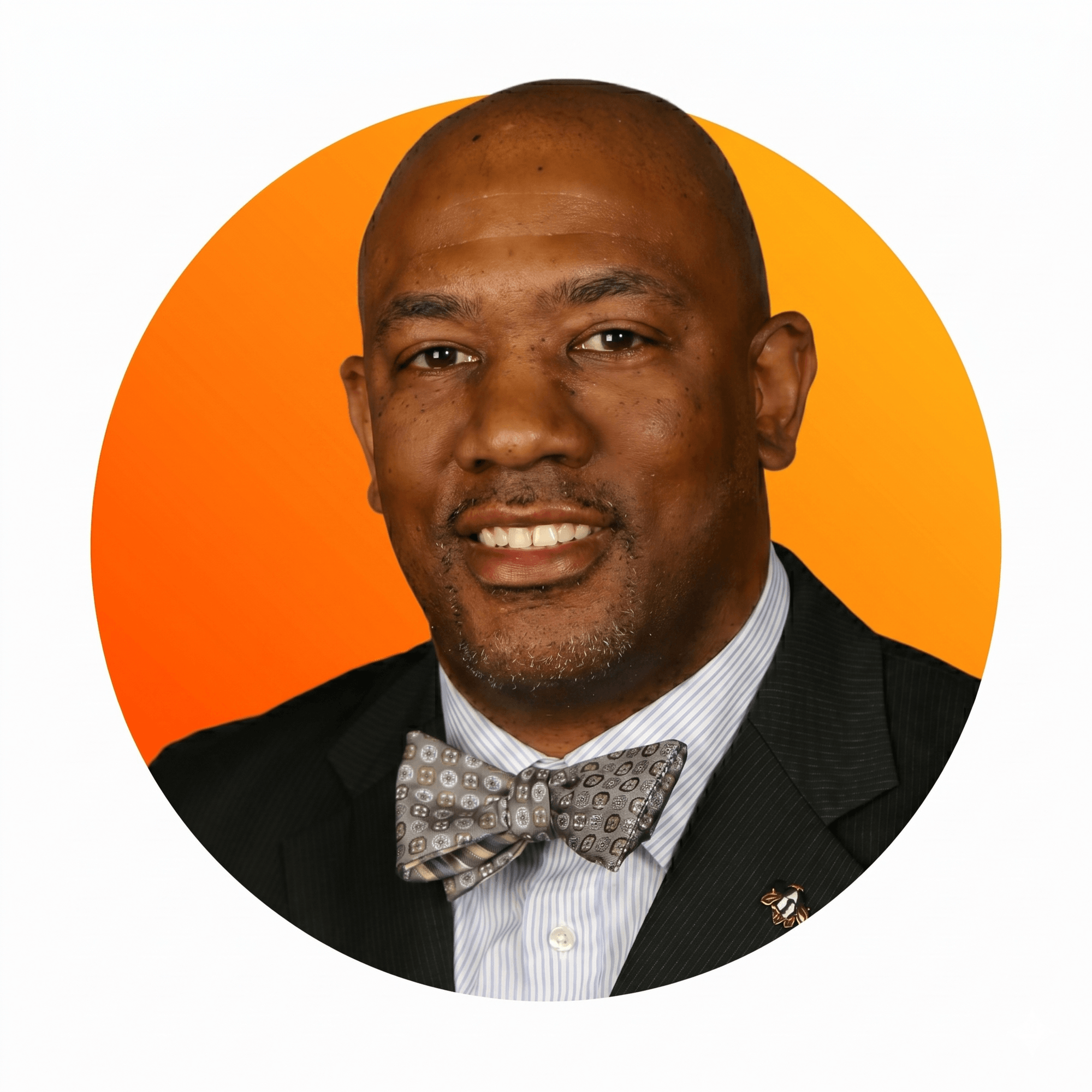
— Wilfredo Laracuente · FICGN Narrative Fellows

Handouts are passed around the room. Pens start moving as people begin thinking and depicting the ordinary — and sometimes unordinary — details of their lives: name, address, employment history. Chairs shift. Papers rustle. The room is quiet, but not silent.
Some people write quickly, thinking about which job to list first, which experience still feels relevant, which chapter of their story belongs on the page. Others pause. What seems unusual to many people outside the room is ordinary here. There is no work history to list. No job experience to describe. Years that might normally be filled with employers and promotions were spent somewhere else entirely.
Prison.
So the question sits there for a moment longer than usual, the pen hovering over the paper, while people decide how to translate years of survival into a single three-letter answer. Eventually, everyone reaches the same line. The question appears quietly on the page, waiting for an answer everyone in the room already knows: Have you ever been convicted of a crime?
Pens stop moving. Some people lean back in their chairs. Others stare at the handout for a moment longer than they did before — not because they don't know the answer. The men and women sitting in those chairs have already faced courts, served their time, and returned home determined to rebuild their lives. What they are calculating in that moment is something else entirely. Should they lie about their incarceration to move ahead in the interview process? Or do they tell the truth, knowing the rest of the interview becomes irrelevant once incarceration history has been revealed?
That moment doesn't only live in this room. It appears across interview tables every day — different cities, different employers, different rooms, but the same question, the same pause, the same quiet calculation about what to do next.
What happens next?
✦ ✦ ✦
Nearly one in three adults in the United States has some form of criminal record. In rooms like this one, that number doesn't feel statistical. It shows up in real time — in the pause, in the hesitation, in the calculation about what to say and how to answer. The problem isn't just that the question exists. It's what it quietly decides before a person ever has the chance to be seen.
The background check is America's quiet life sentence. It doesn't come with a judge or a courtroom. It shows up in the silence of calls that never come, interviews that end before they begin, and doors that close without explanation. No one announces it, but over time the outcome becomes clear. It is a sentence carried out through exclusion — one that limits access to work, stability, and the ability to move forward.
Accountability is part of our workforce and justice system. Courts determine sentences. People get up for work. Time passes. That is how accountability is supposed to work. But when a past conviction continues to determine whether someone can earn a living years later, something else begins to take shape. Punishment moves beyond the courtroom. It follows people into hiring processes, interview rooms, and background checks. A sentence that was supposed to end upon release begins to stretch quietly into the future.
And for many of the men and women sitting in rooms like the one I described earlier, that extension of punishment shows up in a familiar way — the pause, the calculation, the understanding that one answer may decide everything that follows.
I learn from these rooms. I was once in these rooms. The patterns repeat, but the people never do. What shows up here — quietly, consistently — I carry into every conversation about policy, hiring, and opportunity. These rooms hold a kind of knowledge that isn't written down, but it travels — with the people, and beyond the room.
That contradiction becomes harder to ignore the longer someone spends in rooms like this. The language sounds hopeful — Fair Chance hiring, second chances, opportunities to rebuild — but the pause that follows that question, Have you ever been convicted of a crime?, tells a different story. And for many of the men and women sitting in those chairs, the conversation about second chances skips an uncomfortable truth: opportunity was never evenly distributed to begin with — not even as a first chance.
The neighborhoods people grew up in, the schools they attended, the jobs that were available — those conditions shaped the paths they navigated long before a courtroom ever entered the picture. Which raises a different question altogether: if someone has completed the punishment the court required, and still faces barriers to earning a living years later, what exactly are we asking them to prove?
For many people returning home, the answer feels painfully simple. They are not asking for special treatment. They are asking for the chance to work. And in a society that believes in accountability, that should not be an unreasonable request.
Fair Chance policies were created to interrupt that moment — to move the question later, to give people the opportunity to be seen first, before their past is placed on the table. That matters. Because a fair chance is not about ignoring accountability; it's about creating a real opportunity for it to mean something. That means hiring practices that recognize growth, systems that measure who a person is today — not who they were — and a labor market that understands public safety includes economic opportunity.

✦ ✦ ✦
Because when people are given a real chance to work, contribute, and rebuild, the outcome doesn't just change for them. It changes for families, for communities, and for all of us.
__________
One national moment.
Commission an essay. Republish a fellow's piece. Book a fellow for a panel, webinar, or interview. Support the next cohort. The work continues beyond April — and the fellows are ready to lead it.